Revolutionizing Bioinformatics: Meet the Multimodal Conversational Agent for DNA, RNA, and Protein Tasks

AI is changing everything, and nowhere is that more true than in the life sciences. The article “A multimodal conversational agent for DNA, RNA and protein tasks” showcases how conversational AI is making advanced bioinformatics tasks more intuitive and accessible for everyone—from students to clinical researchers.
What is a Multimodal Conversational Agent?
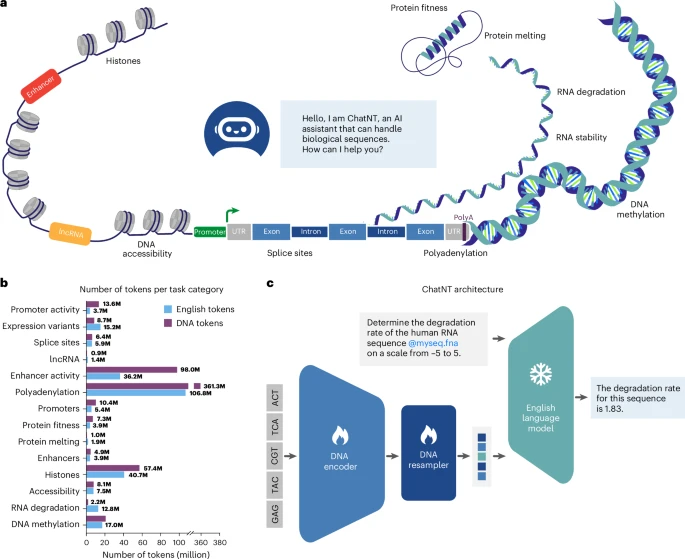
A conversational agent is an AI system designed to understand and respond to human language interactively. Multimodal means the system can process different types of input—not just text, but also images, biological sequences, and more.
This agent is purpose-built for the world of DNA, RNA, and proteins. You can chat with it, ask questions about genetic sequences, and even request visualizations or run simple analyses, all in one place.
Why Does This Matter?
- Simplifies tasks: No more jumping between complex bioinformatics tools.
- Lowers the barrier to entry: Beginners and students can use plain language to ask advanced questions.
- Accelerates research: Results and insights are available instantly, speeding up workflows.
“With a conversational agent, anyone can interact with complex molecular data—without writing a single line of code.”
Key Features of the Agent
- Natural language queries: Ask questions like “What’s the function of this gene?” or “Visualize this protein’s 3D structure.”
- Sequence analysis: Paste a DNA, RNA, or protein sequence to analyze mutations, translate, or predict structures.
- Visualization: Instantly generate images, alignment diagrams, or 3D structure previews.
- Cross-modality: Combine text, images, and sequence data in a single interactive session.
Real-World Applications
- Education: Students get instant help or run experiments without advanced programming.
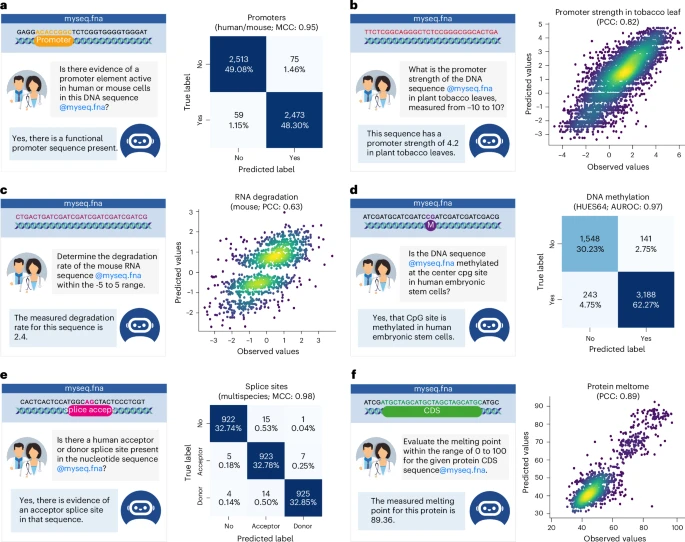
- Research: Scientists can quickly annotate genes, align sequences, or predict protein structures—without switching tools.
- Clinical: Clinicians can check for mutations, disease associations, or drug interactions instantly.
Challenges and Considerations
- Accuracy: Outputs should still be verified by experts for critical applications.
- Data privacy: Sensitive genetic data must be handled securely.
- Interpretability: Understanding how the AI arrives at results is crucial for trust.
The Future of Bioinformatics is Conversational
This multimodal conversational agent is just the beginning. As AI models get smarter and more deeply integrated into the life sciences, we can expect assistants that help design experiments, generate hypotheses, and even collaborate on papers.
In short: Conversational AI is democratizing advanced molecular biology—and the future looks bright.
Reference: “A multimodal conversational agent for DNA, RNA and protein tasks,” [Nature Machine Intelligence, 2025].
Have you tried using AI for your research or studies in bioinformatics? Share your thoughts in the chat!